Do I Need a Party Wall Agreement for a Loft Conversion?
22 May 2026
The Short Answer: Almost Certainly Yes
Loft conversions are one of the most popular ways to add space and value to a London property. They are also one of the most common triggers for the Party Wall etc Act 1996. In our experience, the great majority of loft conversions in terraced and semi-detached homes require notice to be served on at least one neighbour — and very often both.
The question of whether your specific loft conversion triggers the Act is not always obvious, particularly to homeowners hearing about Party Wall matters for the first time. Some conversions clearly do; some clearly do not; some are borderline and depend on the detail of the structural design.
This article explains when a loft conversion triggers the Act, what the agreement actually covers, what it costs, and how to plan the process around your build.
If You're Cutting into a Shared Wall, You Need One
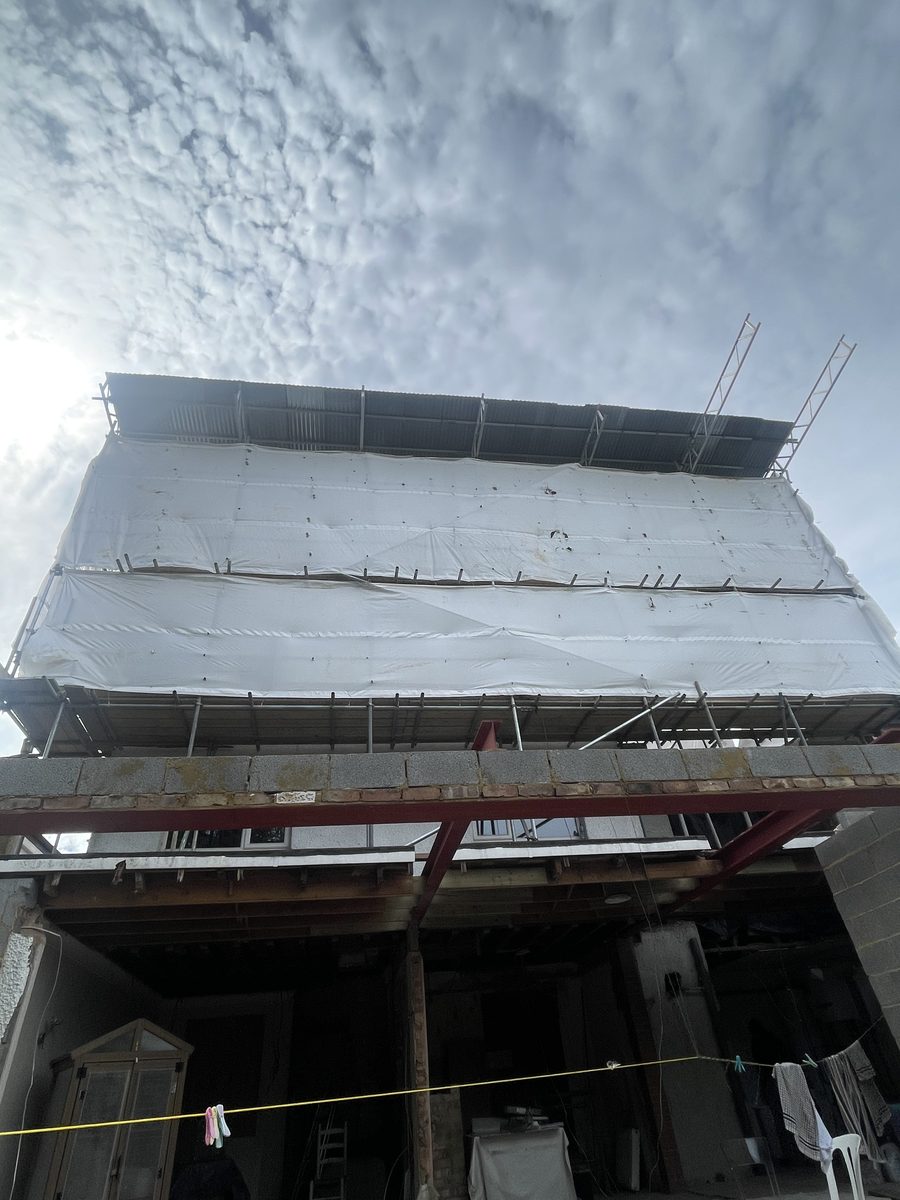
If your loft conversion involves cutting into a wall you share with a neighbour — to install a steel beam, padstone, or any structural element — you almost certainly need to serve a Party Wall Notice. This is by far the most common scenario in terraced and semi-detached homes in London.
If your conversion is in a detached property and does not involve any shared structure, the Act may not apply at all. But that is the minority of London cases.
Which Works Trigger the Act
Several aspects of a typical loft conversion are caught by the Act.
Cutting into the Party Wall
Most loft conversions need steel beams to carry the new floor loads. These beams are usually supported on padstones — concrete blocks bedded into the existing wall. Cutting into the party wall to insert padstones is caught by Section 2(2)(f) of the Act and requires notice under Section 3.
Raising or Rebuilding the Party Wall
Some loft conversions involve raising the party wall to accommodate the new roof line, or rebuilding part of the wall where it has been damaged. Both are caught by the Act.
Weathering and Flashings
Where the new roof needs to be made watertight against the neighbouring property, flashings and weatherings often need to be cut into the adjoining wall. This is also caught.
Chimney Breast Removal
Some loft conversions involve removing or altering chimney breasts that form part of the party wall. This is a particularly sensitive area because chimney breasts on adjoining sides of the wall are often structurally interdependent — alterations on one side can affect the other. Notice is required and surveyors will look closely at structural calculations.
Excavations for Foundations or New Openings
Where the conversion includes a rear dormer with associated foundations, or alterations to the rear elevation, Section 6 excavation notices may also be required if any excavation is within 3 metres of the neighbouring foundations.
When You Don't Need an Agreement
The following situations generally do not trigger the Act, though each should be checked carefully:
- Detached properties where there is no shared wall or boundary with another owner's property.
- Conversions that do not involve any structural alteration to the party wall — for example, where new floor joists are supported entirely on independent steelwork inside the property, not bearing on the shared wall.
- Cosmetic or non-structural works, such as new flooring, plasterboard, or insulation that does not involve cutting into the shared structure.
In practice, most loft conversions in London terraced and semi-detached homes involve at least one of the triggering elements above. We have rarely seen a London loft conversion that did not require notice in some form.
Which Neighbours Do You Need to Notify?
This depends on the property type:
- Mid-terrace: typically need to notify both adjoining neighbours, since you share walls with both.
- End-of-terrace: typically need to notify only the one neighbour with whom you share a wall.
- Semi-detached property: need to notify the neighbour with whom you share the party wall.
- Flat: may need to notify the leaseholders above and below as well as the freeholder, depending on the structure of the building and the nature of the works.
In leasehold properties, notice usually needs to be served on both the leaseholder and the freeholder. Skipping the freeholder is a common error that can invalidate the entire process.
What the Agreement Covers
The Party Wall Award for a typical loft conversion will address:
- The exact specification of the steelwork and padstones to be installed.
- Working hours, typically 8am to 6pm weekdays and shorter hours on Saturdays, with no working on Sundays or bank holidays.
- Protection measures during demolition and steel installation to limit dust, debris, and vibration to the adjoining property.
- Access provisions, where required, for installation of flashings or scaffolding.
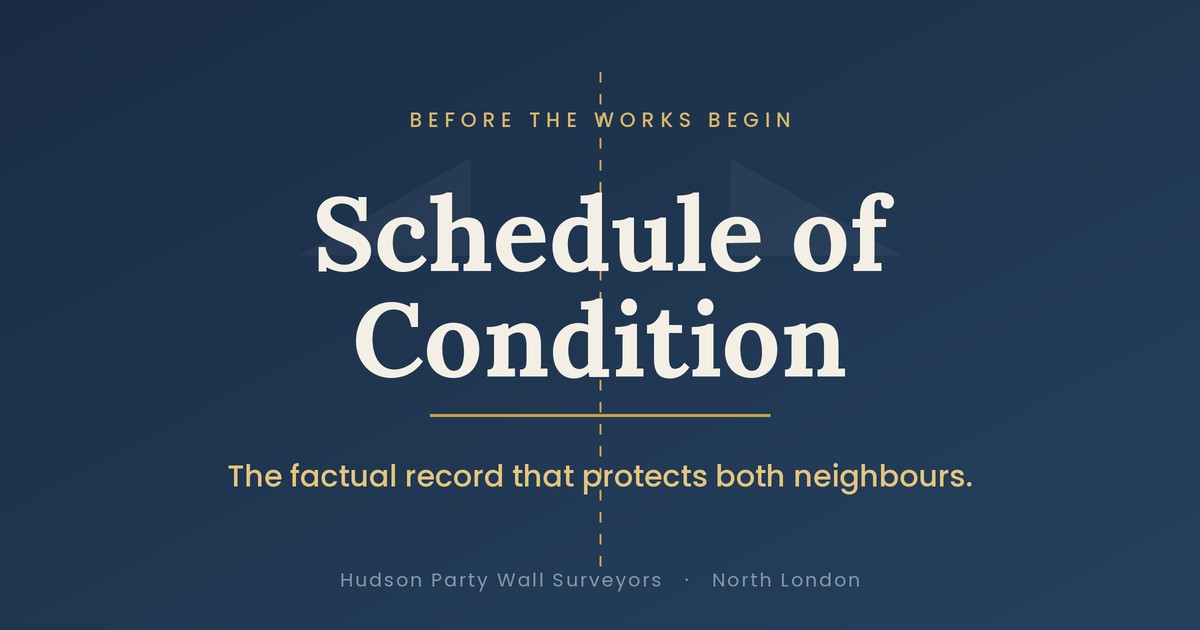
- A Schedule of Condition recording the state of the neighbour's loft, top floor, and other areas at risk, before works begin.
- Procedures for handling any damage that occurs and for inspecting works on completion.
- Insurance requirements for the contractor.
How Long It Takes
For a typical loft conversion with cooperative neighbours, the process from serving notice to having a signed Award in place takes around six to eight weeks. Where the works are straightforward and the neighbours consent without dissenting, it can be considerably faster — as little as two weeks where written consent is given immediately.
Section 3 notices require a 2-month notice period. This does not mean the matter takes two months to resolve — it means works cannot begin until the notice has run its course, even if everything else is agreed. This is why we strongly recommend serving notice at least two months before the planned start on site.
What It Costs
For a typical loft conversion with one Adjoining Owner, total Party Wall costs (covering both sides' surveying fees) usually fall in the range of £1,200 to £2,500 where the matter is straightforward. Where there are two Adjoining Owners or the works are complex, costs can rise to £3,000 to £4,500.
These costs are paid by the Building Owner under Section 11 of the Act. Choosing an Agreed Surveyor (one surveyor acting impartially for both sides) is the most cost-effective option where neighbours are cooperative and the works are uncomplicated.
Planning Your Loft Conversion Around the Party Wall Process
A few practical steps that consistently save time and money:
- Talk to your neighbours informally before serving notice. A short conversation explaining the plans usually defuses concerns and increases the chance of consent without dispute.
- Get your architect's drawings and structural engineer's calculations finalised before instructing the surveyor. The surveyor's work is significantly more efficient when the design is fixed.
- Engage a Party Wall specialist, not a general practice surveyor. Specialists work faster and produce documents that are more likely to be accepted without dispute.
- Build the Party Wall timeline into your overall programme from the start. Aim to have the Award signed at least a month before the planned start on site.
In Summary
If your loft conversion involves any cutting into the party wall, raising the wall, or any other structural alteration to shared elements — which is the case in the great majority of London terraced and semi-detached conversions — you need a Party Wall agreement. The process is well-trodden, takes a manageable amount of time when planned properly, and protects both you and your neighbours during the build.
Planning a Loft Conversion? Speak to Hudson
Our Chartered Party Wall Surveyors handle loft conversion matters across North London every week. Get a free assessment of your specific project. Take a look at our I'm Planning a Project guide, or contact our team today for advice.
Need help with your Party Wall Matters?
We’re here to help. Call for free advice or book a Chartered Party Wall Surveyor to call you at your convenience.